Concrete Hazards Removed Through Full Replacement
Concrete repair in Brandon for commercial and residential entry areas where settled slabs create trip hazards, liability exposure, and uneven surfaces
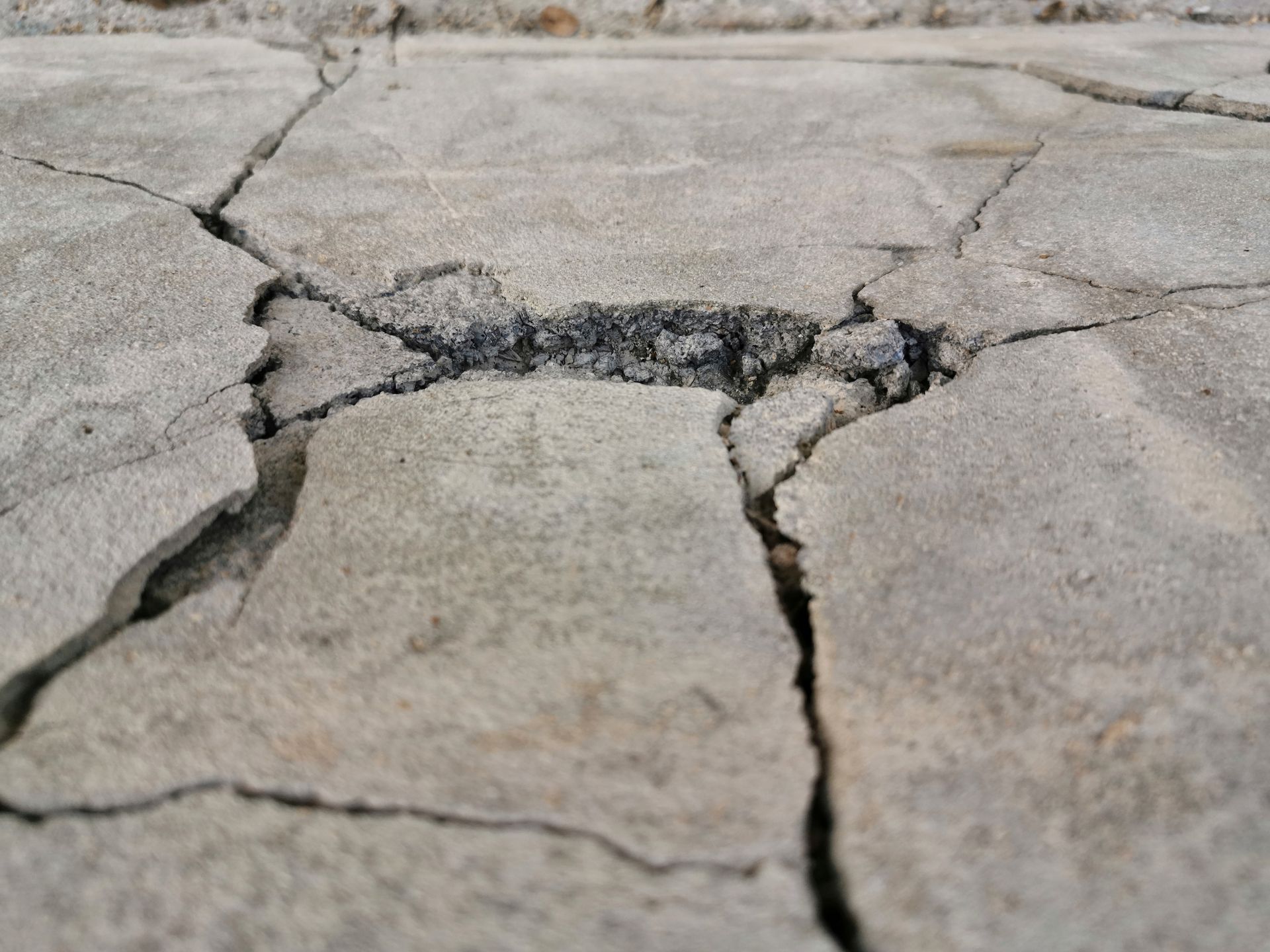
Concrete that has settled below grade at a building entrance or walkway does not become less dangerous over time—the lip grows as the slab continues to move, and the trip hazard it creates becomes a liability concern for property owners and managers. John Douglas Masonry addresses settled and cracked concrete at commercial buildings and residential properties in Brandon through full slab replacement rather than temporary surface treatments. That distinction matters because patching the surface or injecting material beneath a slab that has already separated from its base does not restore the slab to a stable, code-compliant level.
When a slab has sunk at an entry point, the process begins with removing the existing concrete entirely. The crew then prepares the base, sets the replacement slab level with adjacent surfaces, and finishes it to code. This is a complete replacement job, not a cosmetic repair, which means the finished surface is structurally sound rather than temporarily leveled. Scope and quote are determined from photos or an on-site visit before work begins, and the site is cleaned on completion.
Request an on-site assessment to document the existing condition and determine the replacement scope for your property.
Mud jacking and surface patching are techniques that work on slabs with minor voids beneath them but still structurally intact—they are not appropriate for slabs that have broken, separated at joints, or settled so far that a meaningful elevation difference exists at the surface. John Douglas Masonry has 30 years of concrete and masonry construction behind every job, and that experience produces a clear position on when replacement is the correct call: when a slab creates a measurable trip hazard at a point of entry, full replacement is what restores the surface to a safe and functional condition. That call is made during the assessment phase, not after work has started.
Once replacement is complete, the surface sits flush with adjacent slabs or entry materials, the joint between old and new concrete is clean, and there is no longer an elevation difference that creates a trip hazard underfoot. Property owners and facilities managers notice immediately that the area is safe to walk across without the step-up that existed before, and the visual break between the settled area and the surrounding concrete is gone.
Both commercial building entrances and residential driveways and walkways are within scope for this work. The crew handles the removal, base preparation, pour, and finishing as a single job, and the site is cleared of debris before they leave. Licensing and full insurance coverage are in place for both residential and commercial concrete work.
Answers About How the Work Is Done
The following questions address how concrete replacement is evaluated and carried out on commercial and residential properties. Brandon-area commercial buildings and older residential entryways frequently present the same settling patterns, and understanding the replacement process helps property owners make informed decisions about the right approach.
How do you determine whether a concrete slab needs replacement rather than patching?
When the slab has settled enough to create an elevation difference at its edge that constitutes a trip hazard—or when it has cracked through its full thickness and separated from the base—replacement produces a structurally sound result where surface patching does not.
What happens to the old concrete when a slab is replaced?
The existing slab is broken up and removed entirely before the base is prepared for the new pour, which means the replacement concrete is set on a properly prepared surface rather than over the conditions that caused the original slab to fail.
How is the new slab finished so it matches the surrounding concrete?
The replacement is poured level with adjacent surfaces and finished to the same grade and texture as the surrounding area, so the transition between old and new concrete is flush rather than creating a new elevation difference.
What base preparation is done before the new concrete is poured?
The crew prepares and compacts the base material beneath where the new slab will sit, which addresses the void or unstable condition that allowed the original slab to settle in the first place.
What does the finished replacement look like relative to the original trip hazard?
The elevation difference that created the hazard is gone—the surface is level across the joint, there is no step up or down at the transition point, and the area is safe to walk across without the risk the original settled slab presented.
John Douglas Masonry also handles concrete repair in Pearl, Madison, Flowood, Ridgeland, and Jackson. To document the scope of your project and receive a quote, submit photos of the affected area or schedule an on-site visit with the crew.