Stone Features That Fit the Property They Are Built For
Custom stone work and stone wall installation in Brandon for higher-end residential properties requiring natural stone laid to match existing design standards
Natural stone installed without attention to pattern, joint consistency, and leveling looks assembled rather than built. Higher-end homes in the Madison and Ridgeland areas—where custom stone patios, garden walls, and landscape features are common—are surrounded by finished properties where the stonework reads as a deliberate design element rather than an afterthought. Getting that result requires someone who sources quality natural stone and makes layout decisions before the first piece is set: which faces are presented, how the pattern distributes visual weight, and how joint lines are managed so they move in a consistent direction across the finished surface. John Douglas Masonry handles custom stone work in Brandon with that level of preparation built into the process, and the work is completed on schedule with the finished stone protected from damage during installation.
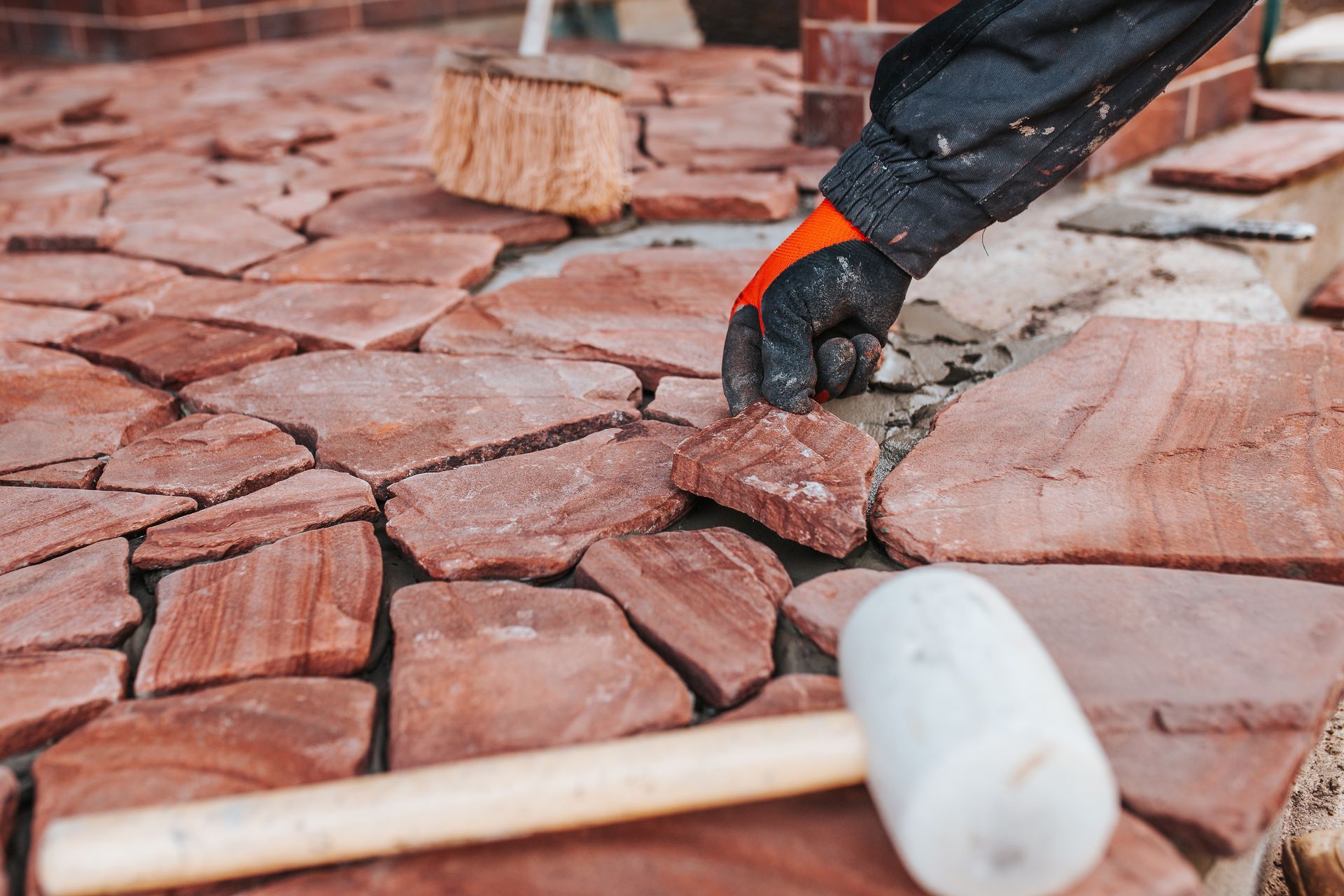
The installation process at John Douglas Masonry begins with sourcing stone that matches your design intent in color, texture, and scale. Each stone is set level and plumb—which matters for vertical stone walls as much as it matters for horizontal patio surfaces—with consistent joint width maintained across the entire assembly. Mortar specification is selected based on the stone type and the application: stone in a garden wall faces different load and moisture conditions than stone on a horizontal patio surface, and the mortar that performs in one context may not be appropriate for the other. Pattern and color decisions are made in conversation with you before placement locks them in.
To discuss stone selection and project scope for your property, call (601) 316-0980 or submit project photos to receive an initial quote based on your specific site conditions.
Stone work differs from brick and block in one key respect: no two pieces are identical. That variability means layout decisions have to be made in the field as the work progresses, not pre-planned in full from a drawing. John Douglas Masonry's 30 years of natural stone and masonry work means those field decisions—which stone goes where, how irregular shapes are trimmed to maintain joint consistency, where the dominant pattern line runs—are made by someone who has resolved those problems across hundreds of projects, not for the first time on yours.
When stone work is completed correctly, the surface reads as intentional: joint lines follow a consistent direction, stone faces are in plane, and no single unit dominates the pattern visually in a way that looks accidental. On vertical stone walls, you can run a straightedge across the face and find no significant deviation. On horizontal patio surfaces, water sheds to the intended drainage direction rather than pooling at low points created by inconsistent setting depth. Those are the observable indicators of stone laid with consistent technique rather than assembled by approximation.
Natural stone and manufactured stone veneer are often compared on cost and appearance, but they differ meaningfully in how they perform and how they are installed. Natural stone is a full-thickness unit with structural mass; manufactured veneer is a thin facing that depends entirely on the substrate behind it. For freestanding garden walls, structural stone elements, and features that will bear any load, natural stone is the appropriate specification. For interior or light exterior accent applications, veneer may be appropriate depending on the design requirements of the project.
What to Know Before Starting a Stone Work Project
Stone installation questions often involve material selection, pattern decisions, and what distinguishes quality installation from work that begins to look worn or irregular after a few years. The questions below address those decisions as they apply to custom residential stone features in the Brandon area.
How is natural stone selected for a specific outdoor project?
Stone selection involves matching the stone's compressive strength and absorption rate to the application—a dense, low-absorption stone is appropriate for horizontal surfaces that shed water, while more porous stone types may be suitable for vertical accent walls in covered locations. Color and texture selection follows design intent, but the structural specification comes first.
Why do joint width and consistency matter in finished stone work?
Inconsistent joint width pulls the eye to irregularities rather than to the stone itself, and joints that are too narrow do not allow adequate mortar thickness to bond both faces of adjacent stones. Consistent joint width maintained across the surface is one of the clearest indicators of controlled, deliberate installation rather than approximated placement.
What does protecting finished stone during installation actually involve?
Stone surfaces set earlier in the project are covered with protective material while work continues on adjacent areas, preventing mortar drips and foot traffic from staining or scratching the finished face. Mortar that cures on a stone face bonds with the surface texture and is difficult to remove without marking the stone, so prevention is the only effective approach.
How does the installation approach differ between a freestanding stone wall and a stone patio surface?
A freestanding wall requires attention to both faces simultaneously, with batter—a slight backward lean into the hill or structural core—built in for taller walls to counteract lateral pressure. A patio surface requires a consistently prepared base layer with controlled drainage slope before the first stone is set, because surface irregularities in a horizontal plane are more visually apparent than the same deviation in a vertical face.
What maintenance does natural stone work typically require after installation?
Properly mortared natural stone requires minimal routine maintenance. Mortar joints should be inspected periodically—every few years on exposed exterior surfaces—for any cracking or separation at the bond line, particularly at horizontal surfaces where water can enter a failed joint and work through freeze-thaw cycles. Repointing isolated joints before they fail through the full depth prevents larger repairs later.
John Douglas Masonry also installs custom stone work in Pearl, Madison, Flowood, Ridgeland, and Jackson. To review your stone project and discuss material options that fit your property's design, call (601) 316-0980.